The mayor Lucio Di Gioia presented in Rome the system of development of the country at the national meeting of the MiC. The village of Serre Cosentine collects the fruits of the regeneration plan based on creative enterprises.
Cerisano lived a day that will remain in the collective memory of the village. It was selected among the only five Italian municipalities invited by the Ministry of Culture at the national meeting "Cultura as a motor of new economy", an appointment that brought together the most significant experiences of the Borghi Programme.
For Cerisano it was much more than an institutional invitation: it was the recognition of a path that in recent years has transformed the country into a place where culture is not only a value, but a generative force capable of creating work, training, enterprise and future. During the meeting, the Ministry asked the selected municipalities to tell their model of development, sharing visions, tools and results.
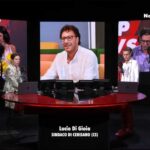
Cerisano brought a story that struck for its intensity: that of a village that believed in culture as a living infrastructure, able to change the fate of a community. The mayor Lucio Di Gioia retraced in front of the MiC the path that gave back energy to the country. He explained how, in recent years, Cerisano has become a real training hub open to the entire region, hosting masters, high-training courses and a political school that has brought in the village names of national importance.
He recalled how, thanks to the collaboration with the Conservatory, a technological musical pole was opened which started two graduate courses, transforming the village into a place where you study, create and innovate. An experience that, in the Calabrian landscape, represents a unicum: a public-private hub that has been able to put together institutions, universities, cultural enterprises and communities.
Di Gioia also told another primacy that excited the audience: Cerisano houses the only museum dedicated to Michel Fingesten in Europe, a cultural garrison that has attracted scholars, artists and visitors from different countries. Around this vision are born artistic residences that have brought in the creative village, musicians, researchers and young professionals, generating a cultural movement that has revived the streets of the historical center.
The mayor explained how this energy began to produce effects on the economic fabric. In recent years there have been new activities, including bed and breakfast, tourist services, a travel agency and new catering companies. Real signs of a village that has again attracted people, ideas and investments.
«Being chosen among the five Italian municipalities invited by the Ministry – said Di Gioia – has deeply moved us. We told a village that believed in culture as a motor of life and work. We showed how, around this vision, training paths, creative spaces, a university pole, a unique museum in Europe and new economic activities were born. It is proof that when a community believes in its future, that future really begins to take shape.»
Gioia then recalled the biggest challenge: to make this model able to live beyond the season of public funding. «We worked to build a system that could walk with their legs. We are strengthening partnerships with universities, foundations and private operators, we are building a stable programming and we are forming new local skills. We want Cerisano to continue to generate autonomous development beyond 2026. A village really lives when it manages to create a future for those who live it.»
The meeting at the MiC represented a moment of pride and awareness for Cerisano. The village brought its history to a national context, showing that even a small community can become a laboratory of cultural and social innovation. And he did so with the strength of those who chose to believe in culture as a way to reborn.